
SaaS go-to-market strategy
A SaaS go-to-market strategy that survives contact with the buying committee.
In software the product is the pitch, and four people with different questions have to agree before anyone signs. Most SaaS go-to-market plans fail on sequence: tactics before position, motions added before the first one is documented, packaging written for infrastructure instead of value.
Where SaaS go-to-market usually stalls
Four patterns show up in almost every software review I run. None of them is a spend problem, and none is solved by adding a channel.
Feature parity used as a position
The site lists what the product does and assumes the buyer will infer why it matters. Two competitors publish the same list, so the decision falls to price and whoever replied first.
A demo booked before the product can prove anything
Demand spend pushes strangers into a call because nothing in the product does the convincing. The pipeline looks alive and close rates say otherwise.
Packaging written by engineering economics
Tiers reflect infrastructure cost instead of the value line a buyer recognizes, so the plan someone should pick is the one nobody understands.
Six channels running at ten percent each
Every channel gets tried, none gets a fair two quarters, and there is no read on which one actually produced the accounts worth keeping.
Early stage and growth stage need different work
The nine sections of a go-to-market plan stay the same. What changes is which sections carry the risk, and running the growth-stage version too early is the most common expensive mistake in SaaS.
Early stage
Pre-product-market-fit through first repeatable sales
One segment, one position, one proof artifact. The goal is evidence that a specific buyer changes behavior.
- Name the segment narrowly enough that the message can be specific
- Write the position as one paragraph a stranger can repeat
- Build one free utility or trial path that proves the claim without a call
- Pick a single channel and run it for two quarters
Growth stage
Repeatable sales, pressure to add motions and segments
Sequencing. Most growth-stage damage comes from adding a second motion, segment, or price tier before the first one is documented.
- Document what the winning deals had in common before expanding the ICP
- Separate self-serve and sales-assisted paths so neither dilutes the other
- Repackage around the value line the best accounts already pay for
- Give expansion and retention a named owner
The four people who have to agree
One position, four translations. Writing for only the end user is why so many product-led plans generate signups and no contracts.
The end user
- What they need
- Proof it fits the way they already work, visible before anyone talks to sales.
- What breaks without it
- Sell them procurement language and they never start the trial that carries the deal.
The economic buyer
- What they need
- The cost of the current workaround, stated in their own numbers.
- What breaks without it
- Lead with features and the request becomes next year's budget conversation.
Security, IT, or ops
- What they need
- Straight answers on data, access, and integration, published rather than requested.
- What breaks without it
- Bury it and a signed deal sits in review for a quarter.
The internal champion
- What they need
- A short narrative they can carry into a room you are not in.
- What breaks without it
- Give them a demo recording instead and the argument dies on the way to approval.
The sequence I run
Four moves, in this order, each one an input to the next. The GTM Builder is this sequence as a working tool, so the plan comes out as a document leadership can approve.
Position and segment
One segment, one paragraph, one provable claim a competitor cannot copy this quarter. Everything after this inherits it, which is why plans that start at tactics unravel two months in.
Buying committee and the decision order
The real sequence of questions before a yes, per role. That order becomes the site structure, the trial experience, and the sales narrative rather than four separate stories.
Packaging and the entry point
Tiers built on the value line the buyer recognizes, with an entry point small enough to say yes to and a clear statement of what is out of scope.
Two channels and the proof plan
Two channels you can sustain for two quarters, plus the proof asset that answers the hesitation at the exact point it appears. Each with an owner and a date.
Proof
Software I positioned and shipped myself
These are my own products, so the go-to-market thinking and the build are the same decision rather than a hand-off between two teams.
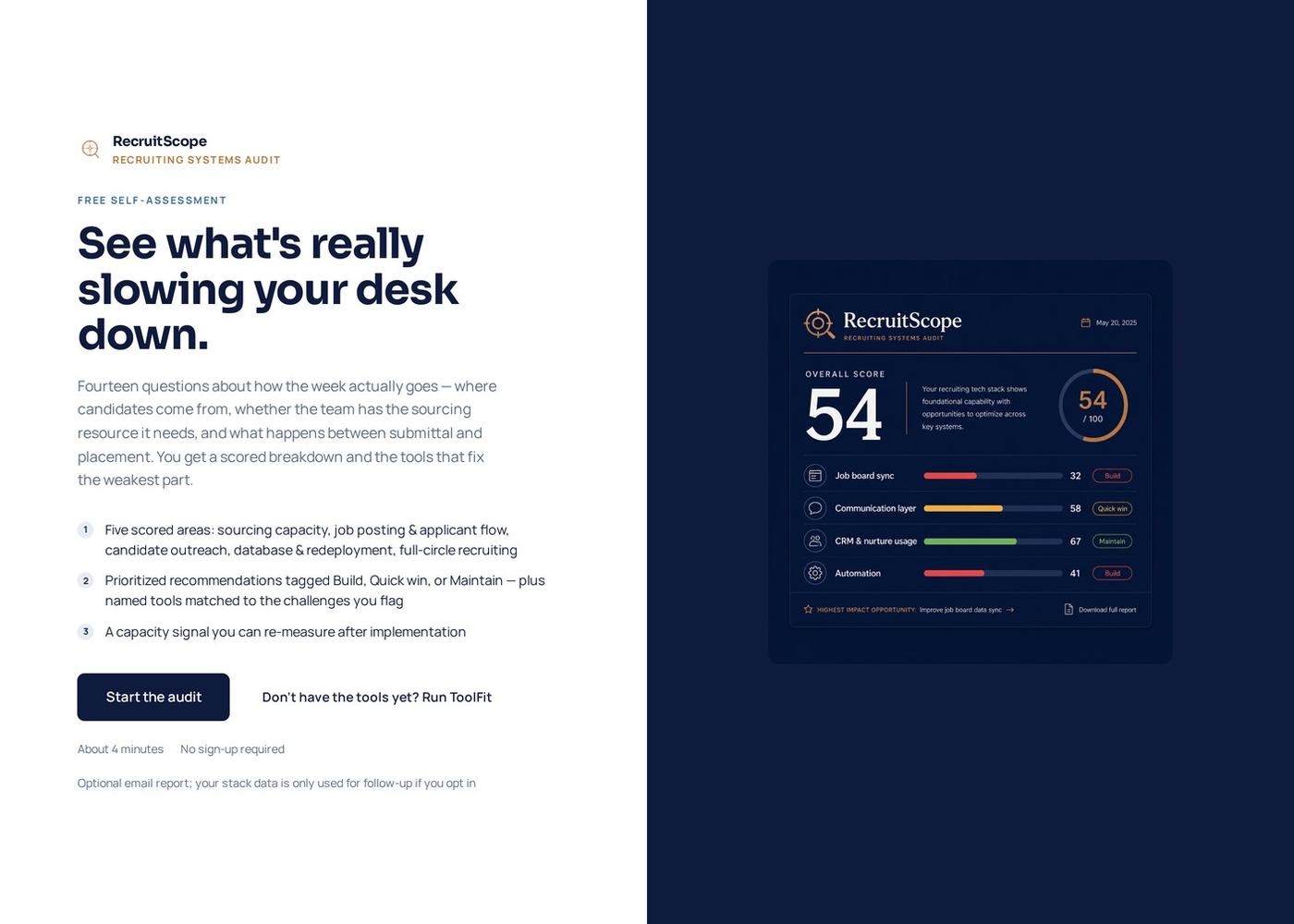
SaaS diagnostic tool, built in-house
RecruitScope
Recruiters carry hidden hours across sourcing, outreach, and database redeployment with no way to see where they go.
Positioning, a scored self-assessment engine, tool-fit recommendations, and a lead path into paid services: a free diagnostic that turns a recruiter's own numbers into a case for changing their stack.
Read the case study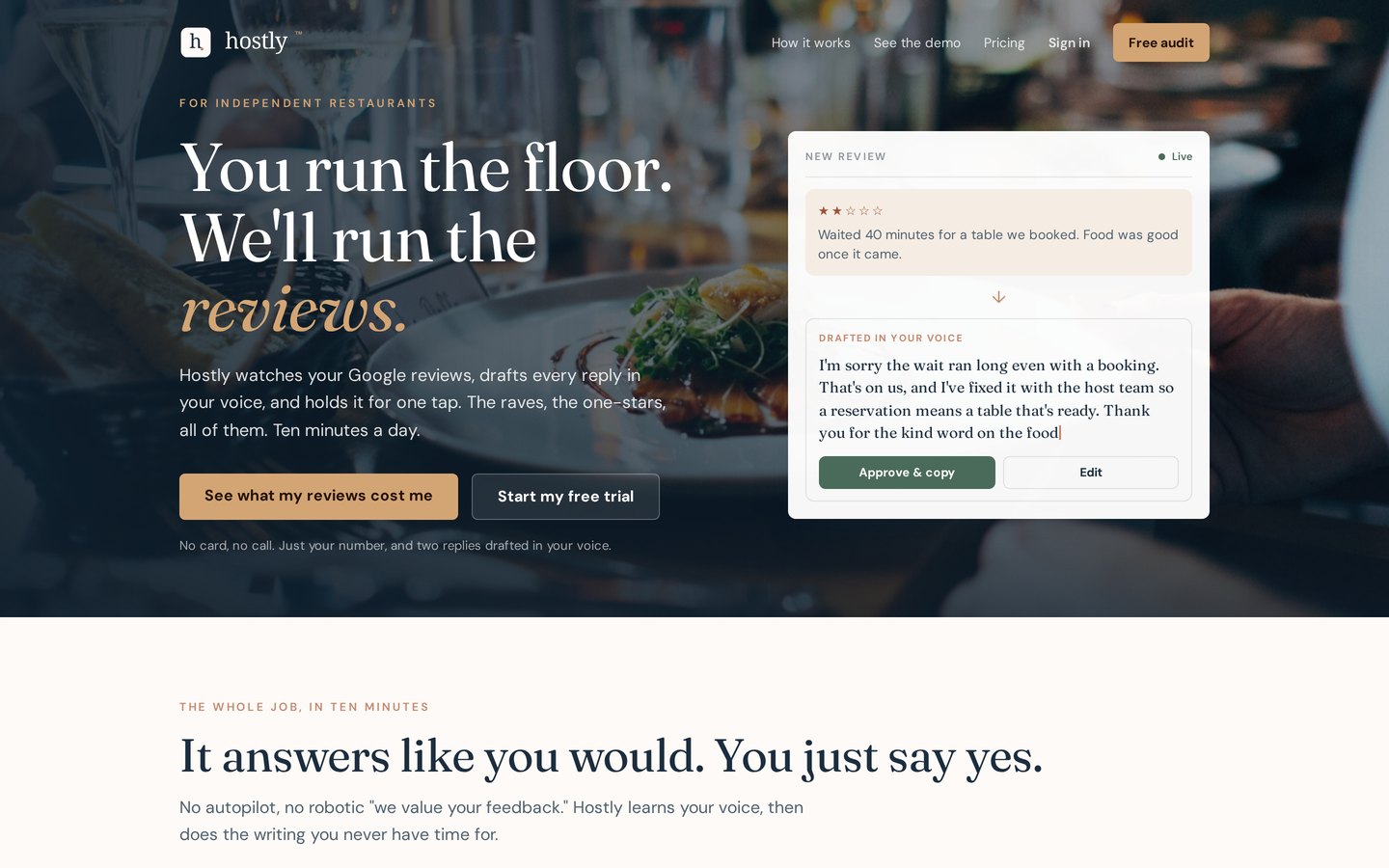
Hospitality software
Hostly Reviews
Owners know reviews drive revenue, with no time and no system for answering them.
Positioning and go-to-market for an owner-controlled review response workflow, taking an evening a week of replies down to roughly ten minutes a day with nothing auto-posted.
Read the case studyWhere this experience comes from
My career runs through B2B software and SaaS, product marketing, media sales, gaming, and industrial manufacturing, including leading strategy as Global Content Team Manager at a software company.
Since then I have positioned, built, and launched my own software: RecruitScope, a scored diagnostic for recruiters, and the Lumière products, where brand architecture, product strategy, and naming had to hold up while the product shipped.
That combination is the reason this page is not theory. I have written the position, watched the trial fail to prove it, and had to fix both. More on how I got here
Ranges for strategy and partnership work are published on the Pricing page, so you can scope this before any conversation.
Next step
Start with the position, then the plan.
An audit tells you what your market already believes about your software before anyone spends a dollar changing it. From there the GTM Builder turns the decisions into a plan and a deck your team can approve.