

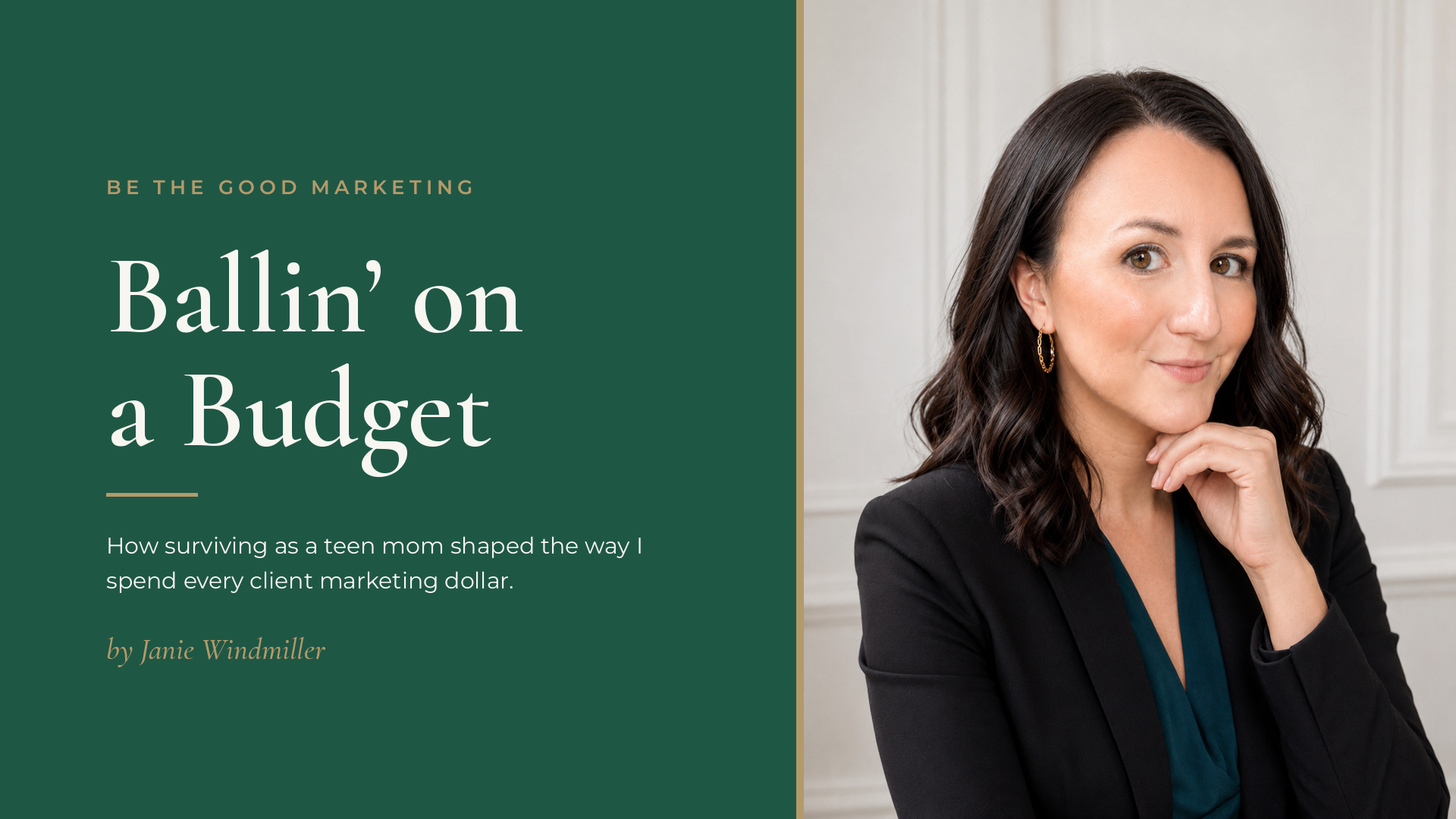
I learned to budget before I ever learned to market.
I was a teen mom, raising and providing for my daughter on my own while I was still a kid myself, with no clue for what to do next. I started at a minimum-wage job in May and worked my way up to supervisor by August. Every dollar I earned had a job before it ever hit my account: rent, diapers, gas, groceries, textbooks, utilities. When you're keeping another human being alive, fed, and housed, every dollar has to pull its weight.
What I called it 20 years ago is the same thing I call it now: ballin' on a budget. (You read that correctly, no "g".)
Survival mode taught me ROI
People talk about survival mode like something you grow out of or escape. I've lived it, and it's exhausting. It's also taught me the most valuable skill I bring to my clients: every dollar counts, and every dollar should be able to tell you what it did.
The small business owners I work with are in the same-stakes game I'm in. They're literally fighting for their livelihood, their employees' paychecks, and the business they built with their own hands. So when someone pitches them a shiny marketing package with no clear return, I have a full Jerry Maguire moment, "Show me the money!"
The sales I talked people out of
Early in my career I sold media, newspaper and print ads, plus some digital ad positions on a local newspaper website. (In 2011. Say it with me: "Yikes.") More than once, I sat across from an owner or decision-maker, did their "needs analysis," and leveled with them: the newspaper wasn't the right fit for their goals. Spend on radio or TV, wherever your customers actually are.
It cost me sales in the moment, but it built my long-term network. Those owners trusted me because I told them the truth when it didn't benefit me, and many of them still serve as my references today. Honesty compounds and produces dividends for years.
You are NOT the Little Mermaid
The mistake I see most often: owners feel like they need to be everywhere. Every platform, channel, trend; it's tempting and seems like a good plan.
You are NOT the Little Mermaid. You do NOT need to be where all the people are. You need to be where your people are.
A tight budget forces a good question: where does my customer actually spend their attention? Answer it, show up there consistently, let the rest go.
Spend when everyone else is quiet
Smart budgets also pay attention to timing. If your Q4 is already booming, pouring more ad dollars into it is like watering a lawn in a rainstorm. Save your spend for the slow months, when you need the lift and the competition is quieter.
The same goes for who you target. If you sell B2B software to retailers, leave clap them clap alone clap in November and December. They're buried. You don't exist to them. Their appetites don't even exist to them in Q4; they're hungry for sales and too busy for you. Reach them when they have room to think.
You are NOT the Little Mermaid. You do NOT need to be where all the people are. You need to be where your people are.
Know your weight class
Let's say you're Joe's Heating, a two-man operation, and Smith Heating is franchise-owned, with ten trucks and a billboard on every highway. You will not outspend Smith. Don't even try.
Instead, find the gaps the big guys leave: the neighborhood they don't serve well, the customer who wants to talk to an actual owner when their furnace dies at 2 a.m., the service they treat as an afterthought. Small budgets win by being precise, and precision is where you can shine.
Why I built BTGM this way
I'm the budget-friendly agency on purpose. I know exactly what it feels like when every dollar is already spoken for, and I won't gamble with your money like it's mine.
"Ballin' on a budget" means strategy first, spend second, and a clear answer to "what did this get me?" every single time. It's how I raised my daughter. It's how I run my business. It's how I'll run your marketing.